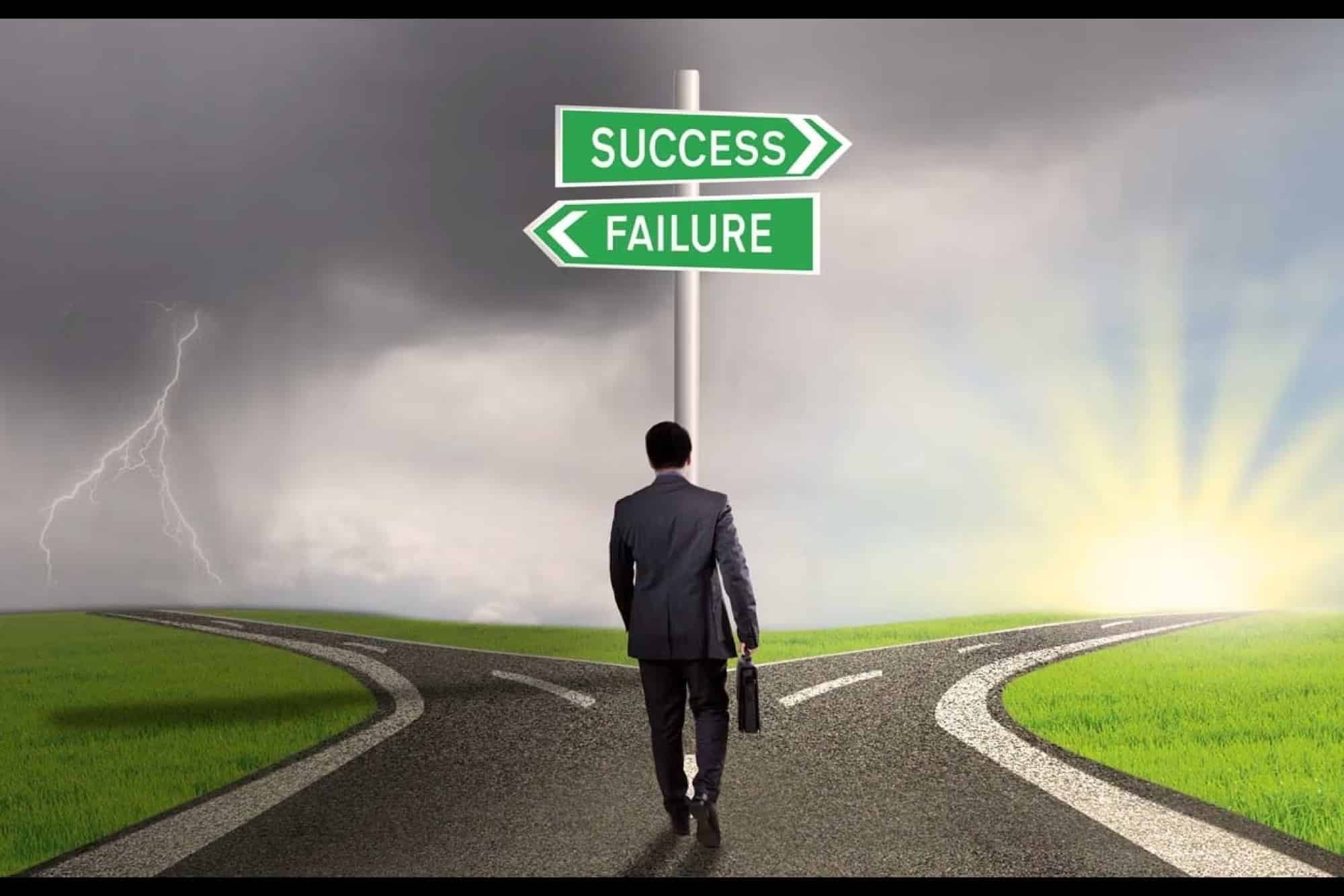
Failure is often portrayed as the opposite of success—something to avoid, hide, or quickly move past. Yet neuroscience, cognitive psychology, and learning science converge on a counterintuitive finding: failure is one of the most powerful learning mechanisms available, activating neural systems for growth that success cannot trigger. Your brain learns fastest when predictions fail—when expectations collide with reality, creating what researchers call an expectation-reality gap. This gap triggers error-correction circuits that fundamentally rewire your understanding. The discomfort of failure is not a sign you should quit; it is a sign that your brain is reorganizing itself in response to new information.
The strategic insight is this: those who treat failure as information (not judgment), who embrace productive struggle as a path to mastery, and who develop psychological safety around mistakes grow faster than those who optimize for comfort and success. This report explains the neuroscience of failure-driven learning, why struggle accelerates growth, how to distinguish productive failure from unproductive, and how to build the psychological infrastructure necessary to make failure an asset rather than a liability.
The Neuroscience of Failure: How Your Brain Learns Fastest from Mistakes
The Error-Prediction Circuit: Your Brain’s Learning Engine
Your brain is fundamentally a prediction machine. At every moment, your brain generates predictions about what will happen next: if you step on ice, you predict you’ll slip; if you speak in a foreign language, you predict the listener will understand or be confused. These predictions are routed through multiple neural systems.
When your prediction proves correct, the brain notes: my model is working; no change needed. But when your prediction fails—when you encounter the unexpected—something dramatically different happens. Your brain detects what neuroscientists call a prediction error (or expectation-reality gap), and this detection triggers a cascade of neurological changes.
The sequence:
1. Unexpected Outcome Detection
The anterior cingulate cortex (a region monitoring for errors and conflict) detects that reality diverged from prediction. This detection is immediate and automatic.
2. Dopamine Signaling Shift
Dopamine neurons, which normally signal reward, shift their firing pattern in response to the prediction error. Rather than signaling “this is good,” they now signal “my model was wrong; update needed.”
3. Attention Reallocation
The error signal triggers a reallocation of cognitive resources toward the point of failure. Your brain literally redirects attention to focus on what went wrong, enhancing conscious awareness of the gap between expectation and reality.
4. Memory Enhancement
The prediction error amplifies the encoding of failure-related information into memory. You remember failures more vividly and retain the details more deeply than successes. This is neurologically adaptive: errors contain critical information about where your current model is wrong.
5. Predictive Model Updating
Most importantly, the error signal triggers updating of your internal models—the neural networks encoding your understanding of how the world works. Your brain literally rewires itself to incorporate the new information revealed by the failure.
Why Failure Produces Deeper Learning Than Success
This mechanism explains why failure is a more powerful learning tool than success: success simply confirms existing models, while failure forces revision. When you succeed, your brain validates its current understanding and moves on. But when you fail, your brain cannot move on; it must revise its model to accommodate the unexpected outcome.
Neuroscientist Robert Sapolsky explains this principle: “Our brains are prediction machines, and they learn fastest when predictions fail.” The discomfort you feel during failure is not an obstacle to learning; it is the neural signal that learning is occurring.
Growth Mindset and Neural Response to Failure
Not everyone responds to failure the same way neurologically. Brain imaging studies reveal that individuals with growth mindsets (belief that abilities can be developed through effort) show fundamentally different neural responses to failure compared to those with fixed mindsets (belief that abilities are fixed).
Growth Mindset Individuals:
- Exhibit enhanced error positivity (Pe)—greater neural attention to mistakes
- Show faster post-error accuracy improvements (error monitoring systems adjust behavior immediately)
- Demonstrate sustained attention to learning feedback after errors
- Display flexible striatal responses to mixed feedback, interpreting negative feedback as informative
Fixed Mindset Individuals:
- Show weaker error responses and less adaptive behavioral adjustment
- Display stronger “punishment” responses to negative feedback in the caudate nucleus
- Fail to benefit from feedback in evaluative contexts
- Show reduced attention allocation to errors, missing the learning opportunity
The practical implication: even if two people experience the same failure, their brains process it differently based on their beliefs about whether failure is information (growth mindset) or judgment (fixed mindset). This is why psychological frameworks around failure matter neurologically, not just philosophically.
Productive Failure: The Science of Learning Through Struggle
What Makes Failure “Productive”
Not all failure produces learning. Some failures simply feel bad and are abandoned. Others are processed superficially without genuine understanding. Productive failure is a specific type of failure that, when properly structured, produces superior long-term learning and transfer.
Productive failure involves:
- Pre-instruction problem-solving: Attempting to solve complex problems before receiving direct instruction
- Cognitive struggle: Engaging in genuine struggle and effort to generate solutions
- Failed generation: Producing solutions that are incomplete, suboptimal, or incorrect
- Subsequent instruction: Receiving targeted instruction that clarifies the correct approach
- Consolidation: Integrating the instruction with the experience of failure to develop deeper understanding
Why Productive Failure Works: The Mechanisms
Research identifies several cognitive and neural mechanisms through which productive failure produces superior learning:
1. Activation of Adjacent Knowledge
When attempting difficult problems before instruction, you retrieve prior knowledge relevant to the domain. This activation creates neural pathways connecting existing knowledge to the new domain, providing scaffolding for the new learning.
2. Knowledge Gap Identification
Struggling with a problem reveals inconsistencies between what you know and what you need to know. This gap identification is critical because it focuses attention on precisely what needs to be learned—a much more efficient target than generic instruction.
3. Impasse-Driven Learning
The experience of reaching an impasse (being stuck) creates what researchers call “intellectual need”—a genuine drive to understand the solution. This differs from passive reception of instruction. You’re not being told the answer; you’re actively seeking it because you’ve discovered a gap in your understanding.
4. Enhanced Memory Encoding
When you’ve struggled with a problem and then receive instruction, the instruction is encoded more deeply because you’re now motivated to understand it and comparing it against your own failed attempts. This enhanced encoding translates to better retention and transfer.
5. Cognitive Disequilibrium
The clash between your attempted solution and the correct solution creates what Piaget called cognitive disequilibrium—a state where your current understanding is insufficient. This disequilibrium motivates curiosity and attention to the instruction that resolves it.
The Research Evidence
Studies across educational domains (mathematics, science, engineering, professional health education) consistently show that productive failure produces superior outcomes:
- Conceptual understanding: Students using productive failure significantly outperform those receiving direct instruction on conceptual understanding tests
- Transfer: Productive failure produces superior transfer to novel problems compared to direct instruction
- Preparation for future learning: Productive failure students show better ability to learn new related concepts after the initial learning
- Long-term retention: Benefits persist on delayed tests (one week later), showing genuine consolidation rather than temporary gains
- Self-efficacy: Students who recover from productive failure show enhanced self-efficacy and greater motivation to persist
The paradox: productive failure feels harder and produces slower initial progress, yet produces better long-term outcomes. This counterintuitiveness explains why many learners avoid it despite its superior efficacy—success feels better than struggle, even when struggle produces better learning.
The Desirable Difficulty Principle: Making Struggle Work for You
Beyond productive failure, cognitive psychology identifies a broader principle: desirable difficulties—conditions that feel harder during learning but produce better long-term retention and transfer.
Desirable difficulties include:
1. Retrieval Practice
Testing yourself produces better long-term learning than restudying. The difficulty of retrieving information from memory (compared to the ease of reviewing it) strengthens neural encoding.
2. Spaced Practice
Distributing learning over time produces better retention than massed practice. The difficulty of retrieving information after delays strengthens memory more than repeated, close-together practice.
3. Varied Practice
Practicing skills in varied conditions produces better transfer than blocked practice in single conditions. The cognitive difficulty of adapting to varied contexts strengthens flexible, transferable skills.
4. Interleaved Practice
Mixing different types of problems produces better learning than blocked practice of single problem types. The difficulty of discriminating between problem types strengthens conceptual understanding.
The principle: conditions that increase difficulty during learning, if the difficulty is productive (forcing deeper processing), produce better long-term outcomes than easier learning conditions.
This explains why cramming feels effective (information is fresh in working memory) while spaced practice feels ineffective (you forget, requiring effortful retrieval). Yet spaced practice produces vastly superior long-term retention precisely because the difficulty of retrieval strengthens neural encoding more than mere familiarity.
The Psychological Challenge: From Threat to Opportunity
Why We Avoid Failure Despite Its Power
If failure is such a powerful learning tool, why do humans instinctively avoid it? The answer lies in evolutionary psychology and threat detection systems. Failure historically signaled danger: the animal that failed at hunting might starve; the human that failed at social cooperation might be exiled. Avoiding failure improved survival odds.
This ancient programming persists. Failure triggers threat-response systems in your amygdala (fear center) and activates stress hormones (cortisol, adrenaline). Psychologically, failure feels dangerous even when the actual stakes are low. This explains why students avoid challenging problems, why professionals avoid trying new approaches, why people resist feedback—failure triggers a real threat response.
The Growth Mindset Reframe: Threat to Challenge
Carol Dweck’s research on growth mindset reveals that the same experience—failure, difficulty, critical feedback—can be interpreted either as a threat (“I’m not capable; my abilities are fixed”) or as a challenge (“This reveals what I need to learn; I can develop capability through effort”).
This reframe is not mere positive thinking. It neurologically changes how your brain processes failure:
Threat Interpretation (Fixed Mindset):
- Amygdala hyperactivation (fear response)
- Reduced prefrontal cortex activity (executive function shut down)
- Narrowed attention (defensive focus)
- Approach motivation reduced (avoidance preferred)
- Stress hormone elevation
Challenge Interpretation (Growth Mindset):
- Amygdala moderate activation (appropriate response)
- Enhanced prefrontal cortex activity (planning, analysis)
- Broadened attention (exploratory focus)
- Approach motivation enhanced (engagement preferred)
- Stress hormone modulation (challenge response rather than threat response)
The same difficulty produces opposite neural states depending on whether it’s interpreted as threat or challenge. This explains why interventions teaching growth mindset are so powerful: they literally change how your brain responds to failure.
Building Psychological Safety Around Failure
For failure to become a learning tool rather than a threat, psychological safety is essential. Psychological safety is the belief that you can take interpersonal risks (admitting mistakes, asking questions, challenging others, taking on new challenges) without facing punishment or humiliation.
Organizations and learning environments with high psychological safety show:
- Greater willingness to report errors
- Earlier identification of problems (failures are surfaced before they escalate)
- More learning from failure (failures are analyzed and discussed, not hidden)
- Better innovation (people attempt novel approaches rather than staying with safe, proven methods)
- Higher performance (the willingness to attempt challenging tasks and learn from failures outweighs the cost of occasional mistakes)
Building psychological safety requires:
- Leadership vulnerability: Leaders admitting mistakes and uncertainty
- Response to failure: Failure treated as learning opportunity, not occasion for punishment
- Active solicitation of input: Explicitly inviting questions and dissent
- Responsiveness: Taking action on feedback and concerns
Without psychological safety, failure remains a threat. With it, failure becomes opportunity.
Failure as Feedback: The Information-Processing Framework
Reframing Failure from Judgment to Information
A critical mindset shift: failure is not judgment of your worth; it is information about the current inadequacy of your approach.
This distinction is fundamental. If failure = inadequate worth, it’s threatening and should be avoided. But if failure = inadequate approach, it’s actionable information that should be sought. The exact same experience produces opposite neural responses depending on this frame.
Judgment Frame: “I failed; therefore, I’m not capable”
- Threat response activated
- Avoidance motivation
- Shame and defensiveness
- Learning blocked
Information Frame: “I failed; therefore, my current approach is insufficient. What specific adjustment is needed?”
- Curiosity activated
- Approach motivation
- Problem-solving orientation
- Learning accelerated
The evidence-based reframe: Every failure contains specific information about what doesn’t work and therefore what to adjust. This is objectively useful information. Your failure wasn’t wasted; it generated data.
The Post-Failure Learning Sequence
Research on optimal failure processing identifies a specific sequence that maximizes learning:
1. Immediate Acknowledgment (0-5 seconds)
Notice the failure without defensive avoidance. Say internally: “That didn’t work. What happened?”
This prevents the defensive shutting-down of learning systems that occurs when failures are immediately rationalized away.
2. Specific Attribution Analysis (5-60 seconds)
Identify what specifically caused the failure. Not “I’m bad at this” but “I didn’t account for X variable” or “I used approach Y when approach Z would have worked.”
Specific attribution (changeable factors) facilitates learning better than global attribution (fixed factors).
3. Immediate Adjustment Planning (1-5 minutes)
Plan specifically what to adjust for the next attempt. What will you do differently?
This shifts from failure analysis to forward-oriented learning.
4. Rapid Reattempt (ideally within 24 hours)
Attempt the task again with the planned adjustment.
Rapid reattempt consolidates learning and prevents the long delays that reduce learning benefit.
5. Reflection on Outcome
Whether successful or failed again, reflect on what this attempt revealed.
This cycle (failure → analysis → adjustment → reattempt → reflection) is how deliberate practice works and how expertise develops.
Practical Implementation: Building Failure Tolerance and Leveraging It
Graduated Exposure to Failure
Most people avoid failure because they haven’t built tolerance for it. Building failure tolerance requires graduated exposure—starting with small, low-stakes failures and progressively increasing stakes as tolerance develops.
Beginner Level (Week 1-2):
- Attempt problems designed to produce ~50% failure rate
- Set artificial deadlines that force releasing imperfect work
- Seek critical feedback from low-stakes sources
- Write and publish content despite imperfection
Intermediate Level (Week 3-8):
- Attempt more complex problems with higher challenge
- Share work with broader audience expecting critique
- Make decisions despite incomplete information
- Advocate for ideas despite risk of disagreement
Advanced Level (Week 9+):
- Attempt novel approaches in high-stakes domains
- Seek mentorship from accomplished people in areas where you’re novice
- Launch projects before they’re perfect
- Take on leadership roles where mistakes are visible
Failure Documentation Protocols
Organizations and individuals that learn most effectively from failure systematically document their failures.
The Documentation Approach:
- What failed: Specific description of what didn’t work
- Initial hypothesis: What you expected to happen
- Actual outcome: What actually occurred
- Contributing factors: What caused the divergence
- Learning extracted: Specific insights about how to adjust
- Future application: Where this learning applies to future work
This documentation serves multiple purposes:
- Captures learning before it fades (memory consolidation)
- Makes patterns visible across multiple failures
- Enables others to learn from your failures (organizational learning)
- Creates a historical record enabling increasingly sophisticated understanding
Building Collective Psychological Safety
For organizational learning from failure, psychological safety must extend beyond individuals to collective norms. This requires:
Transparent Failure Discussion:
Regular forums where failures are discussed openly, analyzed for learning, not hidden or defended.
Blameless Post-Mortems:
Systematic analysis of significant failures focused on understanding system failures, not assigning individual blame.
Failure Thresholds and Expectations:
Clear communication about acceptable failure rates in different contexts. Some domains (innovation, research) should have higher failure rates than others.
Recognition of Learning Value:
Explicit acknowledgment that failures that produced learning have value, even if they didn’t produce success.
Organizations implementing these practices show:
- Faster problem identification and resolution
- Greater innovation (more attempts, more learning)
- Better decision-making (evidence-based rather than fear-based)
- Higher employee engagement (people aren’t spending energy on defensive behaviors)
Failure as Accelerant: Why Growth Follows Struggle
The Timeline Paradox: Slower Now, Faster Later
Productive failure appears paradoxically slower than direct instruction. Students using productive failure take more time to initially learn (they struggle) compared to those receiving direct instruction (which is quick). Yet on long-term measures and transfer, productive failure produces superior outcomes achieved faster than would be possible with direct instruction alone.
This paradox is crucial to understanding why most learners avoid productive failure: the short-term discomfort is obvious, but the long-term acceleration is not.
Someone receiving direct instruction: Day 1 knows the answer, but on Day 30 hasn’t truly learned—they’ve forgotten or can’t apply.
Someone using productive failure: Day 1 doesn’t know the answer (frustrating), but by Day 30 has genuinely learned—they understand deeply and can transfer to new contexts.
The person using productive failure ultimately learns faster, but the speed advantage is invisible in the moment.
Expertise Acceleration Through Strategic Failure
Research on expertise development (Anders Ericsson’s deliberate practice studies) reveals that those who achieve mastery across domains share a critical characteristic: they embrace struggle and failure as central to development. Musicians practice difficult passages repeatedly until correct. Athletes film performances to identify mistakes. Scientists run experiments expecting many failures. Writers rewrite extensively.
In contrast, those who plateau early tend to be those who, once competent, stop embracing challenging failure and instead optimize for comfort. They practice what they can already do well; they avoid domain edges where they’ll fail; they stay within their competence band. This feels more rewarding (success) but produces no further growth.
The counterintuitive finding: those who grow fastest are not the most talented initially; they are the most willing to fail consistently in pursuit of growth. Talent provides a head start, but persistence in failure is what determines expertise.
The Recovery Capacity Advantage
Beyond specific learning, repeated experience with failure builds what researchers call “resilience”—capacity to recover from setbacks quickly and maintain effort toward goals despite obstacles.
People who have been “trained” in failure through repeated recovery develop:
- Greater psychological resilience (lower anxiety, higher confidence)
- Faster recovery times (bouncing back from failures more quickly)
- Better stress management (viewing stress as information rather than threat)
- Enhanced motivation (failure becomes interesting rather than demoralizing)
- Improved decision-making (less emotionally reactive to setbacks)
This recovery capacity transfers across domains. Someone who has repeatedly failed at athletic challenges and recovered is better equipped to handle professional setbacks. Someone who has weathered research failures and continued learning is better equipped to handle business failures.
The Failure-Growth Cycle: From Setback to Breakthrough
Understanding the actual timeline of growth through failure is crucial for maintaining motivation through difficult periods:
| Phase | Duration | Experience | Neural Activity | Action |
|---|---|---|---|---|
| Challenge Initiation | Days 1-7 | Novelty excitement; failure feels shocking | Dopamine elevation from novelty | Continue attempting despite failures |
| Early Struggle | Days 8-21 | Frustration; initial failures pile up; doubt emerges | Error signals trigger; model updating begins | Maintain consistent attempts; document failures |
| Valley Period | Weeks 3-8 | Progress invisible; effort high; motivation wanes; “Why am I doing this?” | Prefrontal cortex fatigue; limited dopamine | THIS IS CRITICAL—persistence through valley separates learners from quitters |
| Breakthrough Recognition | Weeks 8-16 | Sudden clarity; patterns become obvious; early successes emerge | Consolidation of updated models; basal ganglia automation begins | Celebrate progress; expand complexity slightly |
| Integration Phase | Weeks 16-26 | Competence feels natural; struggle transforms to manageable challenge | Automaticity develops; prefrontal cortex disengagement; reduced effort | Continue practice; begin teaching others |
| Mastery Stabilization | Week 26+ | Expertise feels intrinsic; unconscious competence | Full automaticity; neural pathways fully established | Maintain practice; identify new growth edges |
The critical insight: the valley period (weeks 3-8) is where most learners quit. They interpret waning novelty as evidence that they’re not cut out for it. In reality, they’re in the neural reorganization phase where the deepest learning occurs. Those who persist through this valley achieve breakthroughs. Those who quit never reach them.
Designing for Productive Failure: Creating the Conditions
Structuring Challenges Appropriately
Productive failure only works when the challenge is calibrated correctly. Too easy and no struggle occurs. Too difficult and the person quits. The optimal zone is called the “flow zone” or “stretch zone”—difficulty just beyond current capability.
Assessment:
- What is the learner’s current capability?
- What is the next level of capability that would be valuable?
- What is the smallest gap between current and next capability?
The challenge should be designed to bridge that gap, requiring productive struggle but not insurmountable effort.
Example:
- Current: Can solve simple algebra problems
- Next: Can solve complex, multi-step problems
- Design: Problems slightly more complex than current comfort but with sufficient prior knowledge to make progress
The Role of Subsequent Instruction
Productive failure works only when the failure is followed by targeted instruction that addresses the revealed gaps. Failure without instruction is just failure. Instruction after failure consolidates the learning by clarifying what the struggle could not.
Instruction Design:
- Must directly address the gaps revealed by struggle
- Should contrast learner’s failed solutions with correct approach
- Should explain the deep structure (why the correct approach works)
- Should connect to prior knowledge activated during struggle
Building in Reflection Prompts
The difference between productive failure and unproductive struggle is often the presence of systematic reflection prompts.
Rather than leaving learners to interpret their failures privately, structured prompts guide reflection:
- “What did you try? What happened?”
- “What was the difference between your approach and the correct approach?”
- “Why might the correct approach work better?”
- “Where else could you apply this principle?”
These prompts activate error-analysis systems and consolidate learning more effectively than leaving reflection implicit.
Conclusion: Failure as Strategic Asset
The culturally prevalent view of failure as something to avoid, hide, or quickly move past is neurobiologically backwards. Your brain learns fastest from failure because failure triggers error-correction circuits that success cannot activate. The discomfort of failure is not a signal to quit; it is a signal that your brain is reorganizing.
The strategic insight for sustainable growth: embrace failure as information, build psychological safety around it, structure challenges to produce productive struggle, and persist through the valleys where growth occurs invisibly.
Those who achieve expertise across domains share this characteristic: they systematically expose themselves to challenges beyond current capability, struggle with them, fail, extract learning, adjust, and reattempt. They’ve built tolerance for failure and understand its strategic value.
In contrast, those who plateau do so by optimizing for comfort and success—staying within their competence band, avoiding challenge, interpreting failures as judgment rather than information. They feel better in the moment, but they grow more slowly.
The fastest shortcut to growth is not easier paths or more motivation. It is the willingness to fail frequently, the ability to extract learning from failure, and the resilience to persist through the periods when growth is invisible. Failure is not the obstacle to growth. It is the vehicle.